Understanding Pes Anserinus Bursitis: What It Is and How to Treat It????


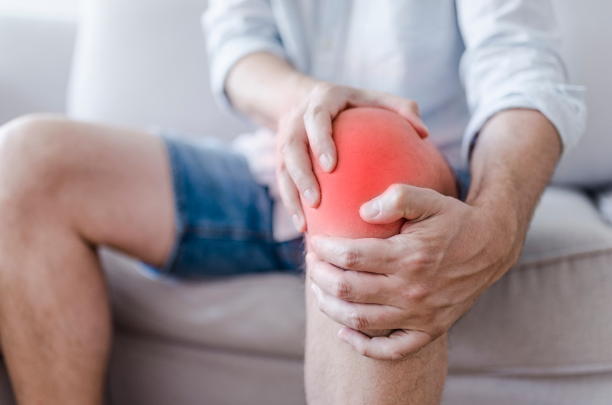
If you’ve been feeling pain on the inside of your knee—especially when climbing stairs or getting up from a chair—you might be dealing with something called pes anserinus bursitis. It’s a common condition, and the good news is that it’s very treatable with the right care.

What Is Pes Anserinus?

The pes anserinus (Latin for “goose’s foot”) is where three muscles from your thigh (sartorius, gracilis, and semitendinosus) come together and attach to the inside of your shinbone, just below the knee. Underneath this area is a small fluid-filled sac called a bursa, which helps reduce friction between the muscles and bone.

When this bursa becomes irritated or inflamed, it causes pain and swelling. This is called pes anserinus bursitis.

What Causes It?

Pes anserinus bursitis can happen for a few reasons:

  • Doing repetitive movements like running or cycling
  • Having tight muscles in your thighs or hips
  • Having arthritis or poor posture
  • Getting hit or bumped on the inside of your knee

Common Symptoms

You might notice:

  • Pain on the inner side of your knee, a few centimeters below the joint
  • Tenderness when you press on the area
  • Swelling or warmth
  • Pain when going up stairs or standing from a seated position
  • No clicking or locking in the knee (which helps rule out other knee problems)
  • Pulling or tightness on the inside or back of the thigh 


How Physiotherapy Can Help

Physiotherapy is a great way to treat pes anserinus bursitis. Here’s what it usually involves:

Step 1: Reduce Pain and Swelling

  • Rest and avoid activities that make it worse
  • Use ice packs to calm inflammation
  • Gentle massage or hands-on therapy
  • Medication (like anti-inflammatories) if recommended by your doctor

Step 2: Stretch Tight Muscles to improve flexibility in your hips and legs

Step 3: Strengthen Key Muscles and practice safe exercise to support your knees

Step 4: Improve Movement and Posture

  • Learn better ways to walk, climb stairs, and move during daily tasks
  • Correct poor alignment or posture that may be causing strain

Step 5: Use Helpful Tools

  • Taping or bracing to support the knee
  • Orthotics (shoe inserts) if your foot posture is contributing


Pes anserinus bursitis can be frustrating, but with the right treatment plan, most people recover well. If you’re experiencing knee pain that fits this description, our dedicated team of physiotherapists can help you get back to moving comfortably and confidently.
Fat Pad Impingement – Anterior Knee Pain

What is fat pad impingement?

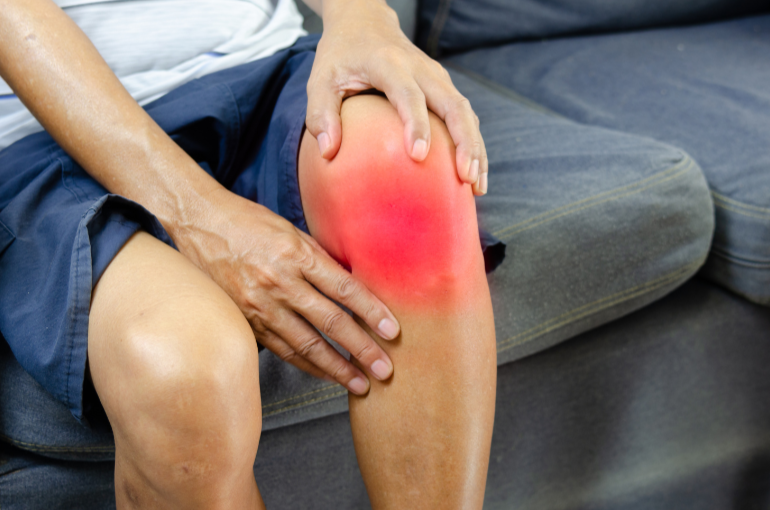
Do you get knee pain when going up or down stairs? Did you fall onto your knee one day and it’s still sore? What you may be experiencing is fat pad impingement, also referred to as Hoffa’s fat pad. Your fat pad is a pocket of soft tissue that sits underneath your knee cap at the front of your knee. It acts as a cushion between your knee cap (patella) and your shin bone (tibia). Sometimes this fat pad can be compressed causing what we call fat pad impingement. If the fat pad becomes inflamed, this can cause scar tissue to form. This scar tissue can lead to less room around the soft tissue of the knees causing further impingement when you try and straighten your knee. 

How can you injure your fat pad?

Injuries to your fat pad can be caused by a variety of injuries:

  • Tight quadriceps (thigh muscles)
  • Fall onto the front of the knee or a direct hit to the front of the knee
  • Overloading of the knee e.g. frequent going up/down stairs
  • An injury where the knee is pushed into hyper-extension 

Why does it hurt so much?

If you are wondering why your knee hurts so much – it very well could be the fat pad. The fat pad is a highly innervated and vascularized structure which means it has lots of nerve endings and blood vessels that supply it. This causes increased pain levels as there are lots of nerves in the area. 

Who may suffer from fat pad injuries?

  • Higher level sports where a blow to the knee may occur e.g. rugby, martial arts 
  • People who have experienced past injuries e.g. ACL tear
  • People who have weakness around the hip or knee
  • People who have a history of hyper-extension in the knee  
  • More common in young women
  • Those that partake in jumping sports 

Symptoms

  • Pain when straightening the knee especially towards the end of the movement 
  • Pain with being on your feet for hours
  • Difficulty doing up/down stairs 
  • Inflammation and swelling under the knee cap
  • Burning or tingling under the knee cap 
  • Stiffness in the knee and reduced mobility
  • May have difficulty walking or moving the knee if irritable 

Management

  • Ice 
  • Avoid aggravating activities – this may require a short break from sports
  • Braces for the knee 
  • Hands on therapy
  • Exercise for stretching and strengthening 
  • Taping 

Exercises to try at home

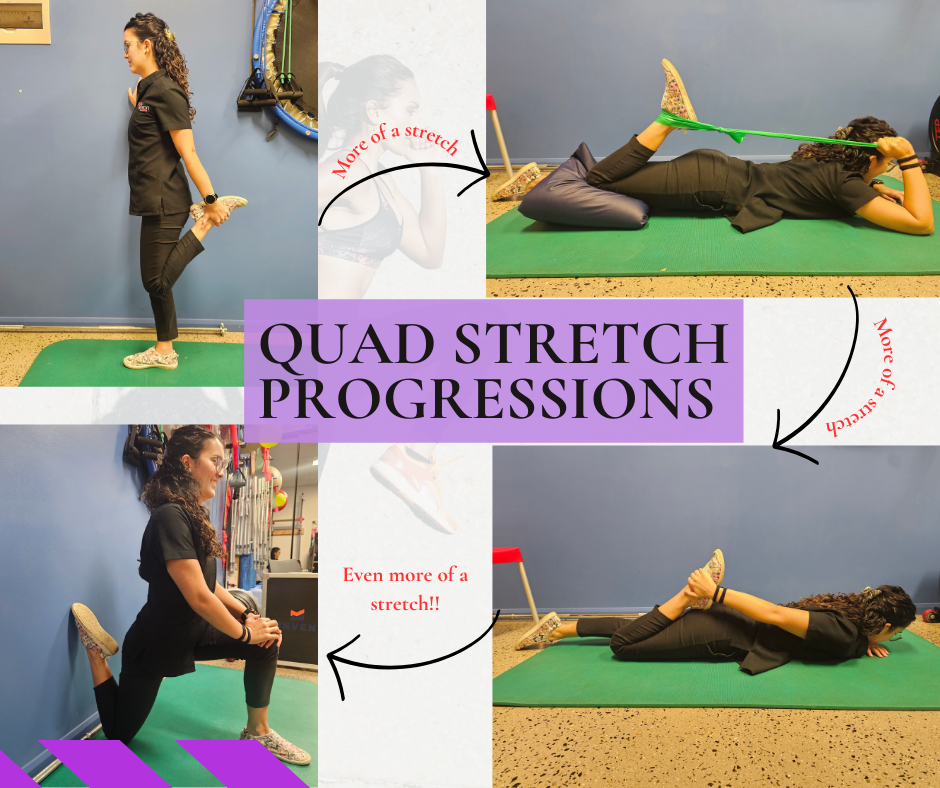
  • Quads stretching
  • Knee extension holds against a wall or with a resistance band if irritable. Aim to hold this position for 30 seconds. You may feel some discomfort during this exercise but it should not make your knee worse afterwards. 
  • Heel slides to increase bending and straightening movement – don’t push the knee into extension if it is sore 

Piriformis Syndrome

Piriformis Syndrome

Piriformis syndrome is a condition which can cause pain, tingling, or numbness in the buttock and down the leg, which can often be mistaken for sciatica. The condition involves the piriformis muscle which is a muscle located deep in the buttock region and the closely located sciatic nerve.

The pain associated with piriformis syndrome is primarily located in the buttock region, with the potential to radiate down the back of the leg, following the distribution of the sciatic nerve. Typically the symptoms affect one side of the body more than the other and is often described as a deep ache.

Piriformis syndrome can affect individuals across various age groups, but it is more common in adults aged 30 to 40. It is slightly more common in women than men and can be more prevalent in active adults.

Certain activities can exacerbate the symptoms of piriformis syndrome:
Prolonged Sitting: Extended periods of sitting, especially on hard surfaces
Physical Activities: Running, walking, climbing stairs and standing

What can you do to help?

Some strategies can help alleviate the discomfort caused by piriformis syndrome:
Stretching Exercises: Regular, gentle stretching of the piriformis muscle and the surrounding muscles can reduce tightness and relieve pressure on the sciatic nerve.
Heat Therapy: Applying heat to the affected area can relax the muscle and reduce pain.
Avoid hard surfaces: Avoiding sitting on hard surfaces can prevent irritation of the piriformis muscle.
Self massage: Releasing the buttock and hip region including the piriformis muscle with massage or trigger point therapy (spikey ball).

Piriformis syndrome is a condition that can significantly impact daily activities and quality of life. By understanding the nature of the pain, identifying activities that aggravate symptoms, and implementing strategies to ease discomfort, individuals can manage this condition more effectively. If you suspect you might have piriformis syndrome, consulting with one of our physiotherapists is crucial for a proper diagnosis and to explore treatment options tailored to your specific needs.

Written By:

Levi Norsworthy
Physiotherapist

PhysioMotion Cairns
Servicing South Cairns including Edmonton, Bentley Park, Mount Sheridan, Gordonvale, Wright’s Creek and White Rock.

Patellofemoral (AKA Knee Cap) Pain


Do you ever get sore knees during daily activities, exercise or while you climb the stairs? Well if you do, you’re not alone. Knee pain with activity is a common concern reported to physiotherapists. Below is some information regarding patellofemoral joint pain and some advice on how you can help manage your symptoms at home. 


How Does the Knee Work:

The knee is a hinge joint which allows for bending and straightening movement. The patellofemoral joint is the joint between the kneecap (patella) and the intercondylar notch of the femur. This is where the kneecap travels during your bending movements. The tracking of the patella is influenced by the balanced pulling forces of the muscles around the thigh. 


The cause of PFJ knee pain: 

Patella femoral joint pain is a term used to describe symptoms underneath or around the knee cap. It can affect a wide range of people and is often aggravated with activities such as walking, running, up and down stairs, and squatting. As the structures on the inside and outside of the knee cap guide it during activity, this balance can be altered causing pain around the knee. This can be caused by the following:

  • Outside muscles being too tight
  • Inside structures being weaker than the outside muscles  
  • Excessive loads through the knee joint 
  • A combination of these factors

2 Ways to Help Your Pain:

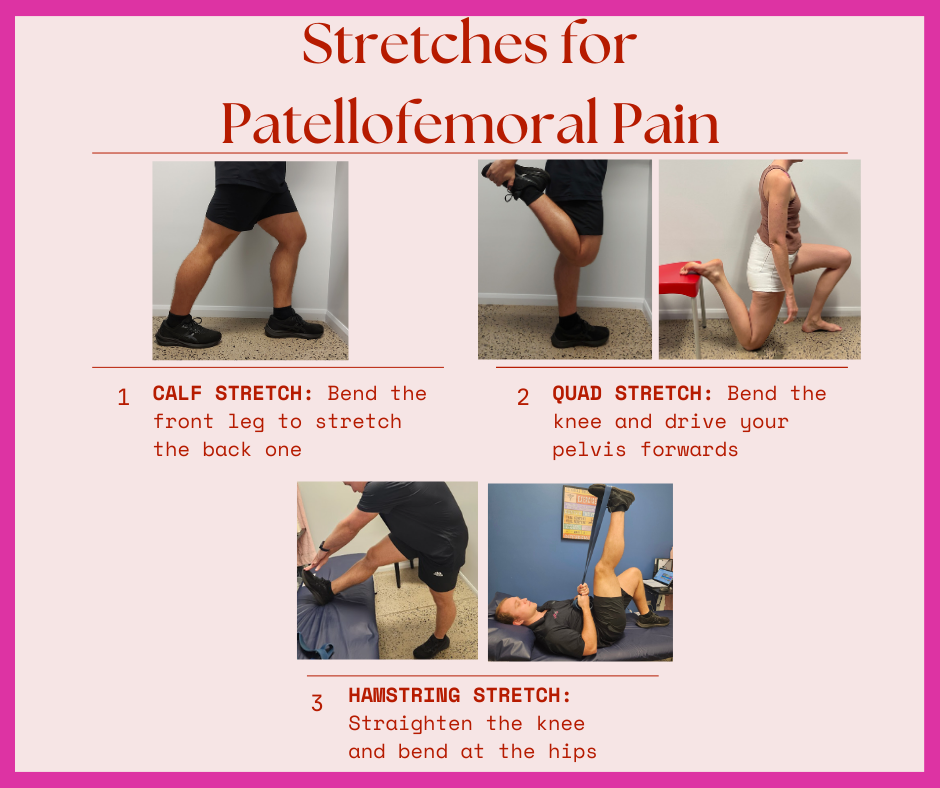
1. Stretching:

Stretching is a great way to reduce the tightness which can be contributing to your symptoms. Stretching regularly throughout the day and both before and after exercise can help. You should trial these stretches at home 

  • Quad 
    • While standing, raise your foot towards your glute. You should feel the stretch along the front of your thigh. Hold for 20 seconds and repeat three times at a mild to moderate stretch pain free.
  • HS
    • While sitting on the floor, have one leg out straight. Lean forward at your hips until you feel a stretch in the back of your thigh / knee. Hold for 20 seconds and repeat three times at a mild to moderate stretch pain free.
  • Calf 
    • Stand with one foot in front of the other facing a wall. Keep your back leg straight while leaning into the wall. You should feel a stretch in the back of your leg. Hold for 20 seconds and repeat three times at a mild to moderate stretch pain free.


2. Strengthening:

Strengthening is a greater way to maintain the balance within the knee. Often the reason muscles get tight is due to weakness (tired muscles get tight), so strengthening is a way to get you moving in the right direction. Trial these strengthening exercises at home:

  • Knee holds
    • Lay on your back and straighten your knee. Now try and push your knee into the bed and hold for 10 seconds repeat three times. 
  • Knee extensions 
    • While sitting on a chair, raise your foot so your knee is completely straight. Then lower your foot back to the floor. Repeated for 10 repetitions, three times.  
  • Sit to stands
    • From a seated position, raise to a standing position. Then lower yourself back into the chair. Repeated for 10 repetitions, three times.


Written By

Levi Norsworthy
Physiotherapist


PhysioMotion Cairns
Shop 5/9-11 Stokes Street
Edmonton QLD 4869

(Servicing Edmonton, Gordonvale, Bentley Park, Mount Sheridan Community)

Tennis Elbow

Do you have elbow or forearm pain that gets worse when you try to hold things? Maybe you have recently picked up a new hobby or job that requires you to use your hands a bit more? For example, using a hammer all day or typing on a keyboard for long hours without a break are both repetitive movements, and if it is something your muscles and tendons aren’t regularly doing then you may have overworked them.

Diagnosis/Description:

Tennis elbow or “lateral epicondylalgia/epicondylitis” is commonly caused by repetitive movements or overuse of the muscles and tendons in the elbow.

Gold standard for diagnosis:

  • Point tenderness at the lateral epicondyle is nearly consistent
  • Tenderness of the epicondylar muscle bodies just distal to this point is frequent
  • Pain with wrist extension against resistance
  • Absence of pain during maneuvers that load the ECRB + absence of US/MRI abnormalities suggest diagnosis other than tennis elbow.


Symptoms/barriers

Here are some common symptoms that are associated with this issue:

  1. Pain from the outside of your elbow and down the back of your forearm
  2. Pain or weakness when holding or squeezing objects
  3. Pain or weakness when bending your wrist

Relevant anatomy:

There are 4 muscles that attach to the lateral epicondyle of the humerus. Most studies suggest that the tendon lesions and beginning of tennis elbow originate from the Extensor Carpi Radialis Brevis (ECRB). This is because the tendon has to tolerate greater loads than the other tendons.

Why it is generally the extensor carpi radialis brevis (ECRB)

  • ECRB is in direct contact with humeroradial joint line (joint loads transferred directly to ECRB)
  • At this site, ECRB is tendinous whereas others are muscular = less able to heal after injury
  • Greater fragility due to the tendon footprint on the epicondyle being 13 times smaller than ECRL
  • Friction on deep surface of ECRB and capitellum during F/E

Severity (grades):

Stage 1. Recent; transient inflammation

Stage 2. Angiofibroblastic hyperplasia characterised by high cell counts, blood vessel hyperplasia, and collagen fibre breakdown

Stage 3. Lesions may progress to partial- or full-thickness tendon tears

Stage 4. Fibrosis and calcification

Demographic/Prevalence:

  • 1-3% of adults each year
  • 10-50% of tennis players
  • Workers who repeatedly exert excessive exertion for an extended period risk developing tennis elbow.

Prognosis:

  • Spontaneous recovery without treatment within 1-2 years
  • After 1 year = Physiotherapy has slightly better results than no treatment (Smidt et al. Randomised 185 pts to corticosteroid, physio, or no treatment)

Treatment:

  • Physio is the first line of treatment with the below modalities being some techniques your Physio may try. 
    • Eccentric exercises
    • Mobilisations
    • Deep friction manual therapy
    • Education
    • Dry Needling

Ref:

Management of Lateral Epicondylitis (Orthopaedic & Traumatology: Surgery and Research)

The 100 most cited articles in lateral epicondylitis research: a bibliometric analysis (Frontiers in Surgery)


Written by


Kalani McKenzie Tonga
Physiotherapist

PhysioMotion Cairns
Shop 5/9-11 Stokes Street
Edmonton QLD 4869

(Servicing Edmonton, Gordonvale, Bentley Park, Mount Sheridan Community)

Navigating the Spine: Understanding and Addressing Thoracic Spine Sprains, Strains, and Kyphosis

Thoracic Spine Sprains: The Unseen Disruptors

Picture this: a sudden twist, a moment of overexertion, or the aftermath of a traumatic incident. These are the scenarios that can set the stage for thoracic spine sprains. Ligament injuries in the middle of the spine can be deceptively subtle yet powerfully disruptive.

The consequences of this however, extend beyond the localized pain and stiffness. The intricate ligamentous network disrupted by a sprain prompts protective muscle spasms, compounding the discomfort.

Referred Pain and Adaptations:

The pain from thoracic spine sprains doesn’t always stay confined to its origin. Referred pain may extend into the shoulders and upper back. The limited range of motion triggered by a sprain can prompt compensatory movements, affecting adjacent spinal segments and joints. It’s a domino effect that demands attention.

Breathing Blues:

Consider the thoracic spine as the conductor orchestrating the symphony of breathing. When sprains disrupt this conductor, the entire respiratory ensemble may falter. Thoracic spine sprains can hinder the natural expansion and contraction of the chest, potentially compromising lung function and respiratory efficiency.

Thoracic Spine Strains: Untangling the Web of Muscular Dynamics

Now, let’s pivot to the realm of strains, where muscles and tendons take center stage. Thoracic spine strains introduce a different set of challenges, intricately weaving their impact through the soft tissues of the body.

Muscular Imbalances and Compensation:

Strains in the thoracic spine upset the delicate balance between muscles and tendons. As the body strives to compensate for the injured area, muscular imbalances may emerge. These imbalances not only affect posture but also contribute to additional strain on surrounding structures.

Radiating Pain and Neuromuscular Symphony:

Thoracic spine strains are not confined to a localized discomfort. The pain may radiate, extending into the arms or lower back. This radiating pain can disrupt neuromuscular control, potentially leading to altered patterns of movement and decreased functional efficiency. It’s a symphony of movement that demands harmony.

Kyphosis: Beyond the Hunch

Now let’s enter the world of kyphosis, where the natural curvature of the thoracic spine takes an exaggerated bow. 

Altering the Spinal Landscape:

Kyphosis influences more than just the thoracic spine. The alignment of the entire spinal column, including the cervical and lumbar regions. This may contribute to conditions like cervical strain or lumbar lordosis as the body adapts to the altered curvature.

Impacts on Vital Systems:

The impact of kyphosis extends to vital systems housed within the thoracic cavity. In severe kyphosis, it can compromise respiratory function, reducing lung capacity and cardiovascular efficiency. It’s a reminder that spinal health goes hand in hand with the well-being of the entire body.

Holistic Solutions: A Physiotherapist’s Approach

Navigating the complexities of thoracic spine health requires a holistic approach. As physiotherapists, our role transcends symptom alleviation; it encompasses understanding the root causes and addressing their systemic impacts.

Our approach involves a thorough assessment to unravel the intricacies of each case. Whether it’s a sprain, strain, or kyphosis, a personalized intervention plan is crafted. Manual therapy, targeted exercises, and posture correction strategies form the pillars of rehabilitation.

Lifestyle Modifications for Long-Term Health:

Beyond immediate interventions, we emphasize lifestyle modifications. Ergonomics, mindful movement practices, and postural awareness become powerful tools for individuals to take charge of their spinal health.

Empowering Beyond the Clinic:

Our goal extends beyond the clinic walls. It’s about empowering individuals with the knowledge and tools to proactively manage their thoracic spine health. By adopting a holistic perspective, we not only manage specific conditions but also foster overall musculoskeletal harmony.

In conclusion, the thoracic spine is more than just a segment of bones; it’s a central player in the symphony of movement that defines our daily lives. Thoracic spine sprains, strains, and kyphosis are not isolated challenges; they are interconnected threads that weave through the entire musculoskeletal canvas. By understanding these intricacies and embracing a holistic approach, we embark on a journey toward a resilient, harmonious spine.


Written By

Jessica Beer
Senior Physiotherapist

PhysioMotion Cairns
Shop 5/9-11 Stokes Street
Edmonton QLD 4869

(Servicing Edmonton, Gordonvale, Bentley Park, Mount Sheridan Community)

All About Headaches

I’m sure we have all had a headache at one point in our life. That intense feeling that you just can’t shake no matter what you try. Headaches are commonly experienced by people of all ages and can come with varying presentations.  

What types of headaches do Physios most commonly see? 

Physiotherapy has shown to be very effective in treating certain types of headaches. Two certain types of headaches that we commonly treat are tension headaches and cervicogenic headaches. 

What are these headaches and what do they involve?

Both of these types of headaches are often related to a dysfunction or tightness in the joints and muscles of the neck and upper back. These types of headaches can be referred to as a dull or pressure headache and often start in the back of the head and can radiate around to your forehead or behind your eyes. 

As physiotherapists, we are trained in assessing and treating clients with headaches and may often prescribe light stretching or strengthening exercises to help any tight joints and muscles relax, thus reducing symptoms. 

What you can do at home to manage your headaches?

  • Drink lots of water to stay hydrated
  • Try and get some quality sleep. Consider how your pillow may be affecting your sleep quality alongside your neck position. 
  • Take time out of your day to relax/ do something you enjoy in order to reduce stress levels
  • Consider if environmental factors set off your headaches – Is it the food you are eating? Bright lights? Certain smells? 
  • Take regular breaks when doing one task for a while – take time to stretch your neck and shoulders 

Can poor posture give me headaches? 

Poor posture is one of the biggest factors that we see that can lead to headaches. In particular tension in your shoulders can cause you to hitch your shoulders leading to tightness and pain. Additionally, with the dependency on using technology, in particular computers, often we find most people will poke their neck out in order to get closer to the screen. This sustained neck poke can cause straining in the muscles at the back of your neck. That’s why regular stretching is important, especially with jobs that are sedentary, stressful or require a lot of neck movement. 

What do Physiotherapists do for headaches? 

Physiotherapists work on releasing both stiff or tight joints and muscles. This is often through hands-on manual therapy with joint mobilisations, massage and maybe even some dry needling. Physiotherapists not only physically treat your neck, but we look for ways to reduce your headaches in the future. This may include but isn’t limited to looking at your work set up, sleeping position or stretches that may benefit you. 

Stretches 

Regular stretching can significantly help reduce the intensity and frequency of your headaches by  reducing tightness in your muscles and joints. Try these three stretches at home regularly and see how they work for you.  

  1. Looking straight forward, bring your ear to your shoulder and tilt your head to the side, hold for 20 seconds. You may use your hand for overpressure. 
  2. Look down towards your armpit and hold for 30 seconds. You may use your hand again to apply overpressure. 
  3. Look up and down multiple times making sure to keep your chin tucked in 


Self massage  

  • Hold your fingers on your temples and lightly push – this can help relieve pressure in that area as well as feelings of tightness behind the eyes
  • Place your fingers at the back of your head along the top of your neck/bottom of your skull. Apply some pressure here and hold it for 10 seconds, this can ease your headache.


When to seek extra help?

Please speak to your doctor if you experiencing the following:

  • Fainting
  • Nausea or bouts of intense dizziness 
  • Trouble speaking or swallowing 
  • Visual disturbances such as double vision 

If these symptoms resonate with you, contact one of our friendly team members today to have an assessment and develop a management plan. Click here to book an appointment!


Written by
Amelia Sant
Physiotherapist

PhysioMotion Cairns
Shop 5/9-11 Stokes Street
Edmonton QLD 4869

(Servicing Edmonton, Gordonvale, Bentley Park, Mount Sheridan Community)