
Acceleration and Deceleration in Running & Sport: Why It Matters
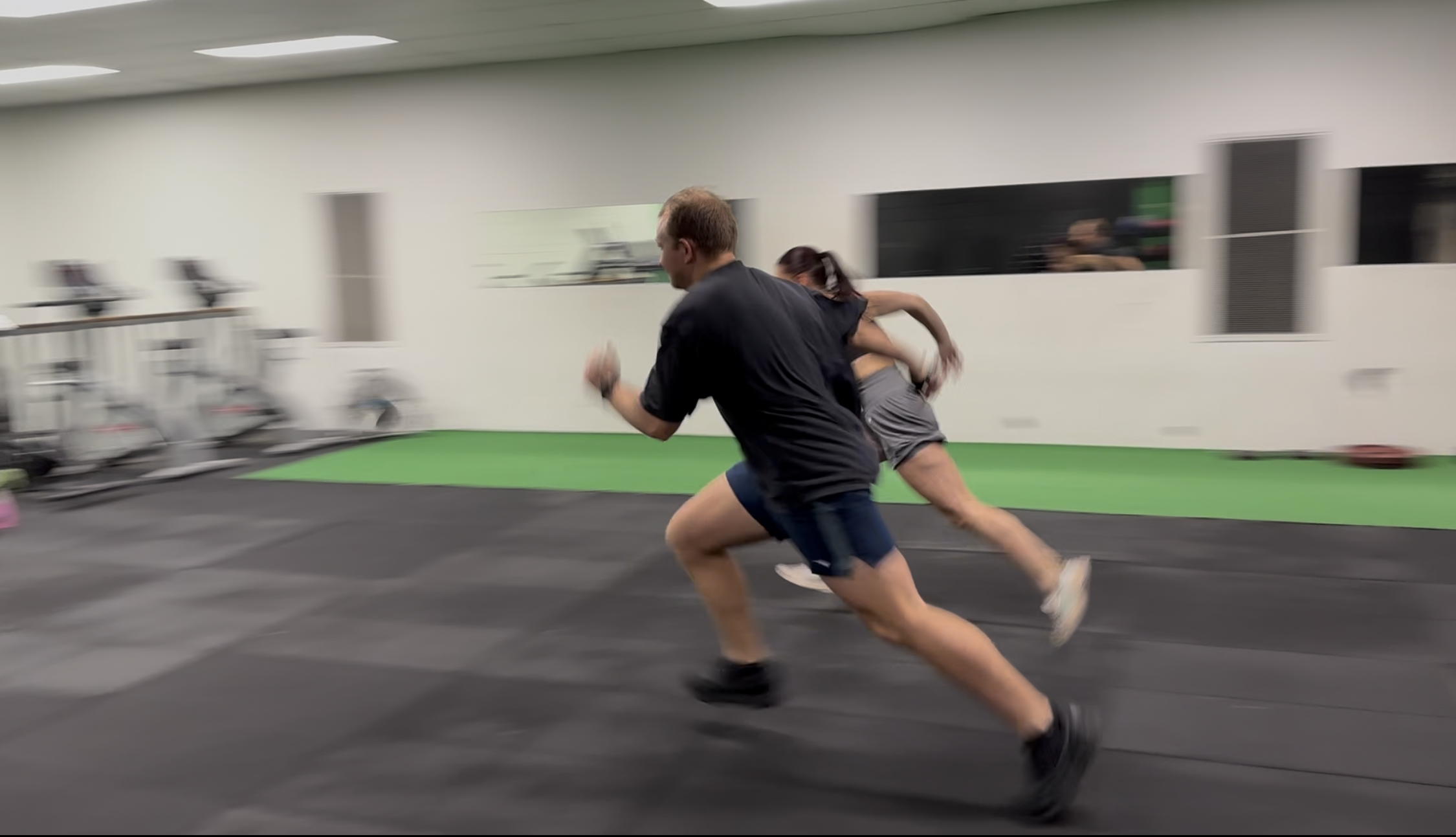
When we think about running, we focus on speed and endurance, but rarely do we pay attention to two critical phases: acceleration and deceleration. These components are essential not only for performance but for reducing the risk of injury.
What Is Acceleration and Deceleration?
- Acceleration is the process of increasing speed, like when you push off at the start of a run or sprint to chase a ball.
- Deceleration is the ability to slow down or stop safely and efficiently. This is crucial when navigating turns, stopping quickly, or changing direction.
Both phases place high demands on your muscles, joints, and nervous system. They require strong coordination, muscle control, and balance—particularly through the hips, knees, and ankles.
Why It Matters for You
Many running-related injuries occur during deceleration, when the body absorbs high forces while trying to slow down. Poor control in these moments can lead to issues like knee pain, hamstring strains, or Achilles tendinopathy. Similarly, acceleration without proper strength and form can overload tissues, reduce efficiency and increase risk injury.
When recovering from an injury, retraining acceleration and deceleration is a crucial step before safely returning to sport. These movements simulate the real demands of running and game play, where sudden starts, stops and change of directions are common.
How Physiotherapy Can Help
One of our physiotherapists can assess how well you accelerate and decelerate during running. Through movement analysis, strength training, and technique drills, we can help you:
- Improve running efficiency
- Reduce injury risk
- Enhance performance in both straight-line running and change-of-direction sports
- Safely return to sport
Written by
Levi Norsworthy
Physiotherapist
PhysioMotion Cairns
Shop 5/9-11 Stokes St
Edmonton QLD 4869